

Yellow Soup
A fairytale recipe

Happy Spring Equinox everyone! This month I am teaching a class on myth and transformation in a course called Rewilding Fairytales. So, in tandem with the Kitchen Metaphysics project, I am posting a fairy story I wrote many years ago in a high desert winter, as our second journey began. The first recorded Mark’s and my leaving our London lives to go on the road in in South America. This second was more challenging. Because once you have left, what then? What do you put your attention on, where do you go?
In terms of creative work, it demanded we make a deeper connection with the land, with creatures, with the ancestors, with our existential nomadic life. It meant breaking out of the limits of prose, and venturing into different forms: from verse to fable, art to performance..
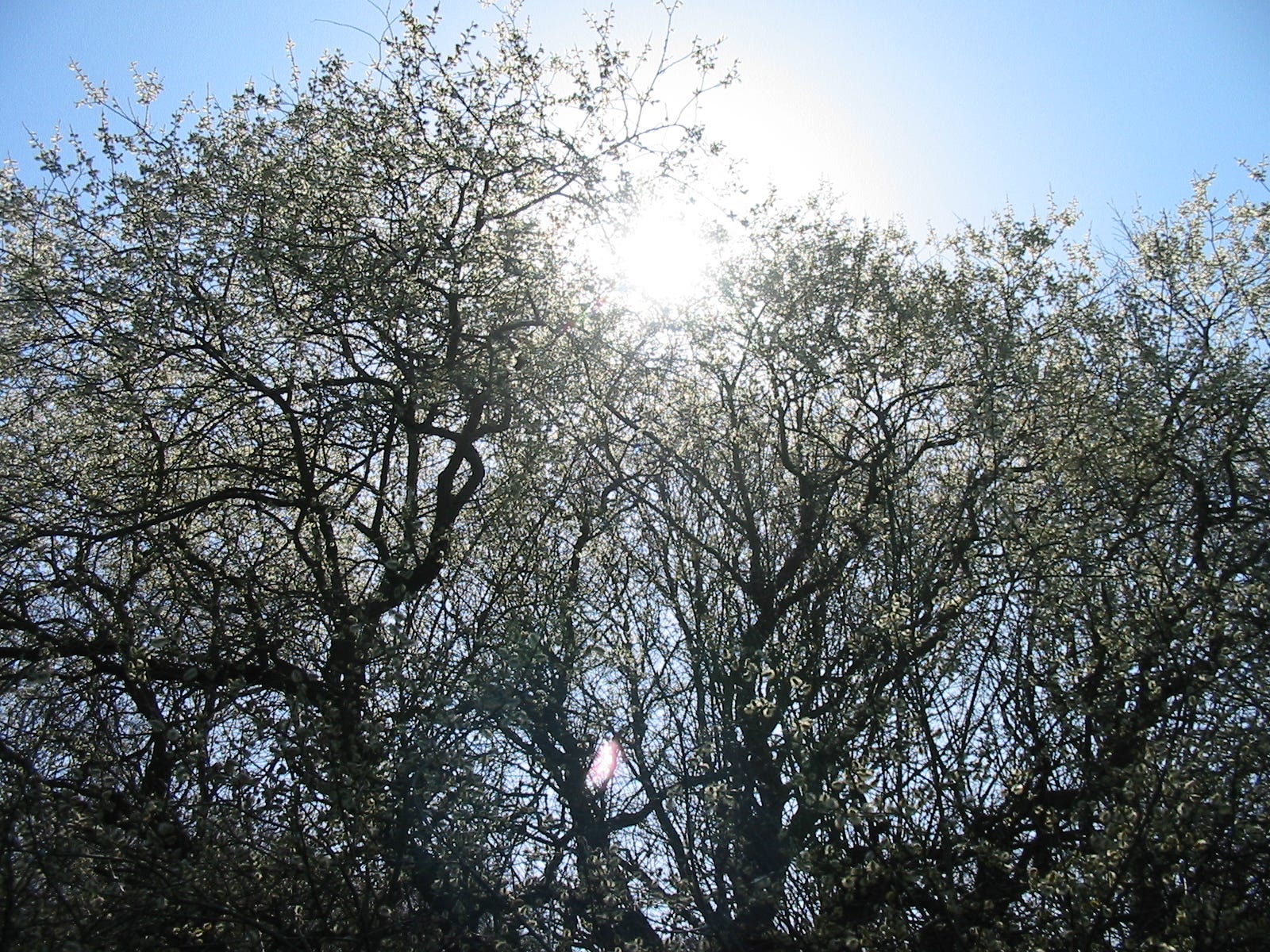
‘Yellow Soup’ is a short ancestral tale from a book made from those encounters, The Raven Flies Upside Down. I chose it because it is truly a golden moment when spring arrives after a hard winter. This week I have been out visiting the first flowers, as we always used to: the wild daffodils on the tumulus. pussy willow on East Hill, the primroses and lesser celandine in the back road ditches, gathering nettles for soup. Although this one is more likely to be green….
Do see news below for the two April workshops I am giving, one online, the other in-person.
FAR AWAY ACROSS THE SNOWY STEPPES in the easternmost part of the world there lived an old woman in an unnamed town. She minded a shop in a dusty street and lived alone, with only a bird in a cage for company.
In the shop were jars of mixtures that the old woman sold for bruises and pains and whooping cough and stomach ache, and even broken bones. In the dusty darkness of the shelves, you could not see how old these jars were. Who knows what was in them? Who knows what was in the yellow soup the old woman kept bubbling on the stove?
Years went by and the woman never left her shop. The summers came and the children flew kites outside the town walls in the shapes of tigers and bears, and in the winters when the streets smelled of wood smoke, rumours would come of an army of hungry horsemen that roamed the land. Lock up! advised the elders. For the horsemen may come and ransack our town.
But the old woman never locked her door. ‘You never know who might need my help she said, and lit a lantern that swung above it. And she waited behind the counter.
Through the open door, people came to the old woman for her knowledge of herbs and flowers. She would look at them carefully with her bright eyes and give them a remedy wrapped up in a piece of twisted brown paper, or a lotion in a glass pot. Sometimes the children would come in and tease her by ringing her brass bell and run out, banging the screen door behind them. But the old woman never minded. She kept her own counsel and she swept the shop, and every evening she sang to her little bird:
– O bird, sweet bird, sing to me!
And he did. And the old woman would close her eyes and listen to his song and she would stir her yellow soup. And inside herself she would smile. for she knew, she knew something precious, though she did not know what it was.
*
And so it was one frosty evening, that the captain of the horsemen came silently into the town. Dusk was falling as he entered the old woman’s shop. No one saw him, except the little evening star.
– Old woman, he said, and threw his saddle over the chair (the saddle that was covered in black sheepskin). They say you know everything about herbs. My shoulder has been aching for a month now and no-one can cure it. I have a long winter ahead of me. Can you come to my aid?
The old woman went up to the captain of the horse and looked into his black flashing eyes without blinking.
– Sit down, she said and went to pour him some of the yellow soup from the stove.
– What are you giving me, he said gruffly.
– Eat this, she said, and put a bowl of the soup on the table.
The captain ate the soup and as he did a dragon fire ran through his body: the spoon in his hand trembled and something lurched so deep inside him he gasped. And then in his mind’s eye he saw a green valley peppered with orchards and pumpkin gardens and big white poppies and he felt the warm of sunshine on this face and heard the voices of invisible women washing clothes by the river and he looked up an saw shiny dark leaves above him and glimpses of blue sky between them and the smell, the smell of the tree. O, what was it on this gentle breeze? And then he remembered, it was the sweet fragrance of orange flowers. And a terrible hunger for the forgotten valley of oranges yearned inside the captain of the horse. Tears ran down his dry cheeks, and as they did, every bone in his body stopped aching.
He turned to the woman in astonishment.
– What in thunder have you put in this soup, old woman?
– Don’t you know, captain, she replied, that an army marches on its stomach?
– Tsk, I have no taste for the army! declared the captain. We are nomad horsemen. Do you not know the difference?
The woman leaned forward in puzzlement. She had imagined he was one of the dangerous soldiers.
– But do you not come armed and in disguise? she said
– Of course he replied. Wait one moment.
And he want outside.
When he returned there was a giant eagle on his wrist.
– We are hunters, he said. We hunt in the wild lands.
The woman looked into the fierce dark eyes of the eagle, and the eagle looked into the fierce dark eyes of the woman, and in the infinite space between them there was a huge cracking, like ice breaking across a lake. For the woman had remembered what she had always known.
– We must be going now, said the captain of the nomad horsemen. What do I owe you?
– There is no payment, said the old woman and she smiled at him. And he was the fist person ever to see her smile.
The captain wrapped himself in his cloak and mounted his horse and disappeared into the cold night that was full of stars.
The woman returned to her shop. She swept the floor and she stirred her soup, and she said to her bird: I waited, she said, and he came. And it was not as I imagined. But now I know what I know and it is good.
And you may ask: what did she know, what did the soup contain, did the man return and O, a thousand questions! But I will tell you, none of this is important. What is important is that the woman knew the way to the man’s heart, as surely as he rode across the steppes and the eagle soared towards the sun. Sometimes we wait and we do not know what we are waiting for. But we are always waiting to give our gift. One day we will be asked and one day we will give, and there will be no payment. Because what is ours by grace we will never want to keep locked in.
And so it was that the old women still kept her shop door open (for she never knew who might need her help). And sometimes on a starlit night she heard the hooves of the nomad horsemen galloping past her window. And she smiled now as she waited behind the counter and the yellow soup kept bubbling on the stove and in the springtime the children flew their kites in the shapes of bears and tigers outside the walls of the unnamed town.


NETTLE AND WILD GARLIC SOUP
Several potatoes, diced
4 good handfuls nettles (tops are best)
1 onion. chopped
Strong veg stock (I like to add celeriac, fresh thyme, lots of leek)
Butter or olive oil
Several leaves of wild garlic
Creme fraiche (optional)
Black pepper, sea salt and a pinch of grated nutmeg
Sweat the onion in a large saucepan. Add diced potatoes for a few minutes. Add stock and cook for 20 or so minutes. Rinse and sort nettles (with gloves!). Cook for a few minutes until soft, then chop and add to soup for the last five minutes. Season and serve with creme fraiche and strips of wild garlic. You can squash the soup with the back of a spoon, or puree, but I like the chunks.
The kind of soup that just keeps getting better. Bon appetit!
APRIL EVENTS
Rewilding Fairytales course and Landspeaking workshop
Two teaching events I am taking part in next month - booking now. Do join us!
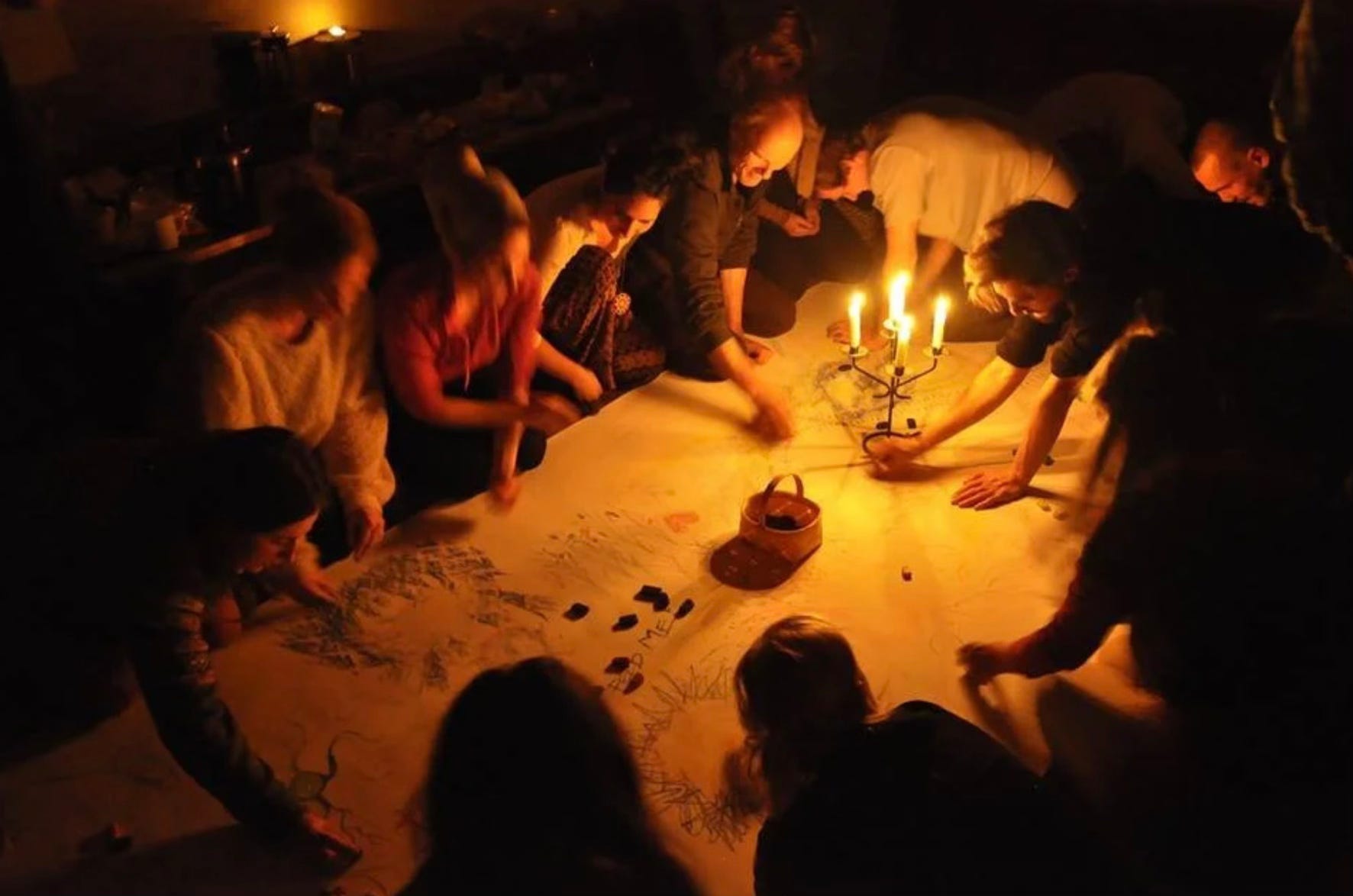
Rewilding Fairytales: Folklore, Animism & Mythic Ecology Starting 30th March
Curated by Joanna Gilar and guided by scholars and storytellers, this course on the Advaya platform explores the layered history of folk tales across cultures. Moving from Europe to the Caribbean to India, each session uncovers how these tales can be reclaimed as ecological, relational narratives, and help us find our place in the more-than-human world.
I will discuss myth and the technologies of transformation, part of the ‘Becoming Wild’ module with writer Sophie Strand.
‘Landspeaking Workshop’, New Street Market’s Green Month in Woodbridge, Suffolk on 26th April
Calling our East Anglian readers! Landspeaking is an embodied practice that explores a deeper, more creative relationship with our local territories. Developed in Dark Mountain’s We Walk Through the Fires workshop series, this session will be an opportunity to engage, individually and as a group, with a wild place at a turning point in spring. We will learn how to tune into and physically and imaginatively connect with the land and its inhabitants – plants, birds, winds, stones – sharing our encounters and turning those insights into a creative practice.
Taking place throughout April, New Street Market’s Green Month features curated events designed to bridge the gap between environmental advocacy and local culture, including talks, music, feasts, and workshops. More information here.
BOOKSHELF
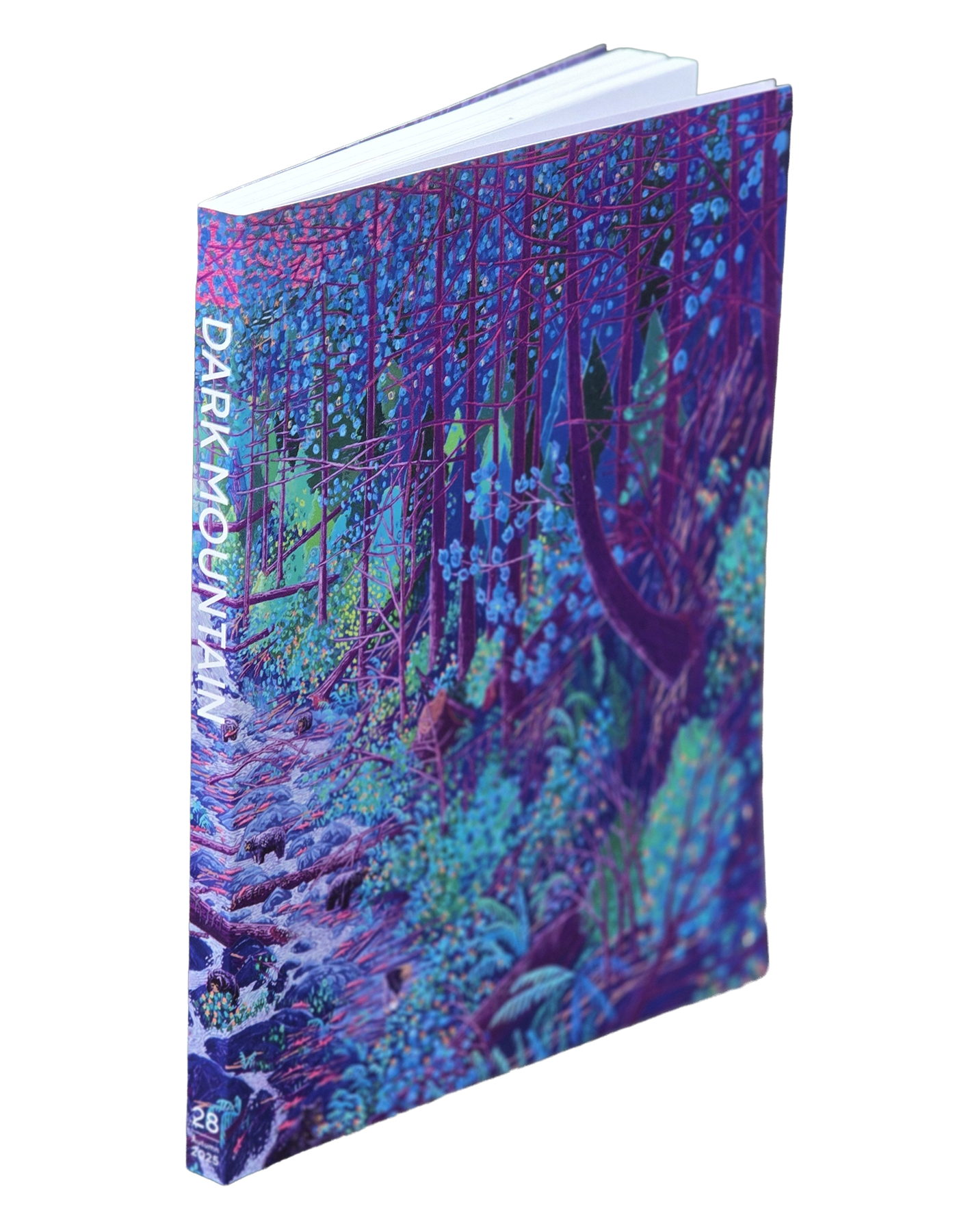
In case you missed it: do travel into the colourful pages of Dark Mountain’s most recent issue, I co-created with a great crew of fellow editors and artists.
Dark Mountain: Issue 28 (£20.99)
Our Autumn 2025 special issue on Uncivilised Art celebrates the work and practice of artists in a collapsing yet still beautiful world. Order from the website or take out a subscription to future issues of Dark Mountain and get Issue 28 for only £13.99.
Oh, thank you for sharing this wonderful story.
We've been making nettle soup this weekend. Blazing with spring greenery!
This magical, evocative tale landed well with me today! Yesterday I was going to make beetroot soup and the veg was yellow and I thought yellow soup would be unappetising so the beetroot became a raw, crunchy sweet and sharp yellow salad! ⛺️